The maker
Built by hand. Built for your gun. Built to last.
There is no production line here. No standard case pulled from a shelf and made to fit. No shortcuts hidden beneath the leather.
Every Tinus Tredoux gun case begins with the gun itself. Whenever possible, Tinus personally measures the firearm that will live inside it - studying every point that determines how it should sit, how it should be protected and how it should be presented. Because a fine gun should not simply fit inside its case. The case should be built around it.
When distance makes an in-person fitting impossible, Tinus provides a detailed measuring procedure that he developed himself. An owner or gunsmith anywhere in the world can take the precise measurements that become the foundation for everything that follows.
Made, not assembled
Much of what makes these creations distinctive exists because Tinus learned to make the tools he could not find.
Tinus does not simply build the wooden shell and purchase the rest. The brass corners, locks and fittings are specially made for him. When commercially available tools could not produce the finish, accuracy and character he wanted, he designed and developed his own tooling to do the work properly.
Wood is selected, cut, fitted and finished by hand. Hardware is specially made and fitted for the individual case. The interior is shaped around the firearm it will protect. Leather, lining and finishing details are brought together with the same attention given to the structure beneath them.
There are easier ways to build a gun case. This simply isn’t one of them.
The wood
One piece of oak, all the way round
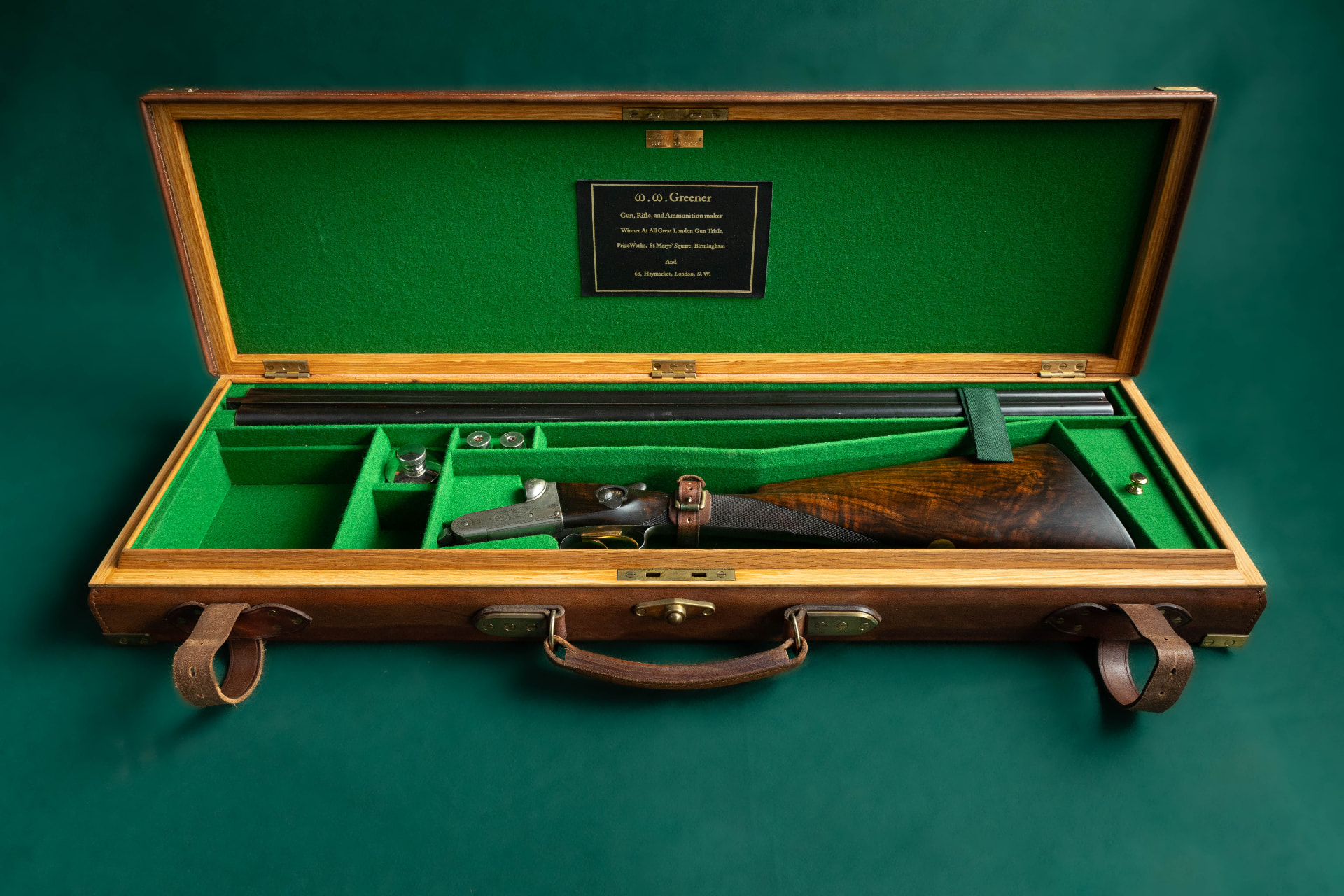
The case is cut from a single piece of American white oak so that the grain and colour run on unbroken from side to lid. It is the harder way to work and the only way to get that continuity of figure, and it is the first thing a knowing eye looks for.
The leather
Hand-stitched, and stained by his own hand
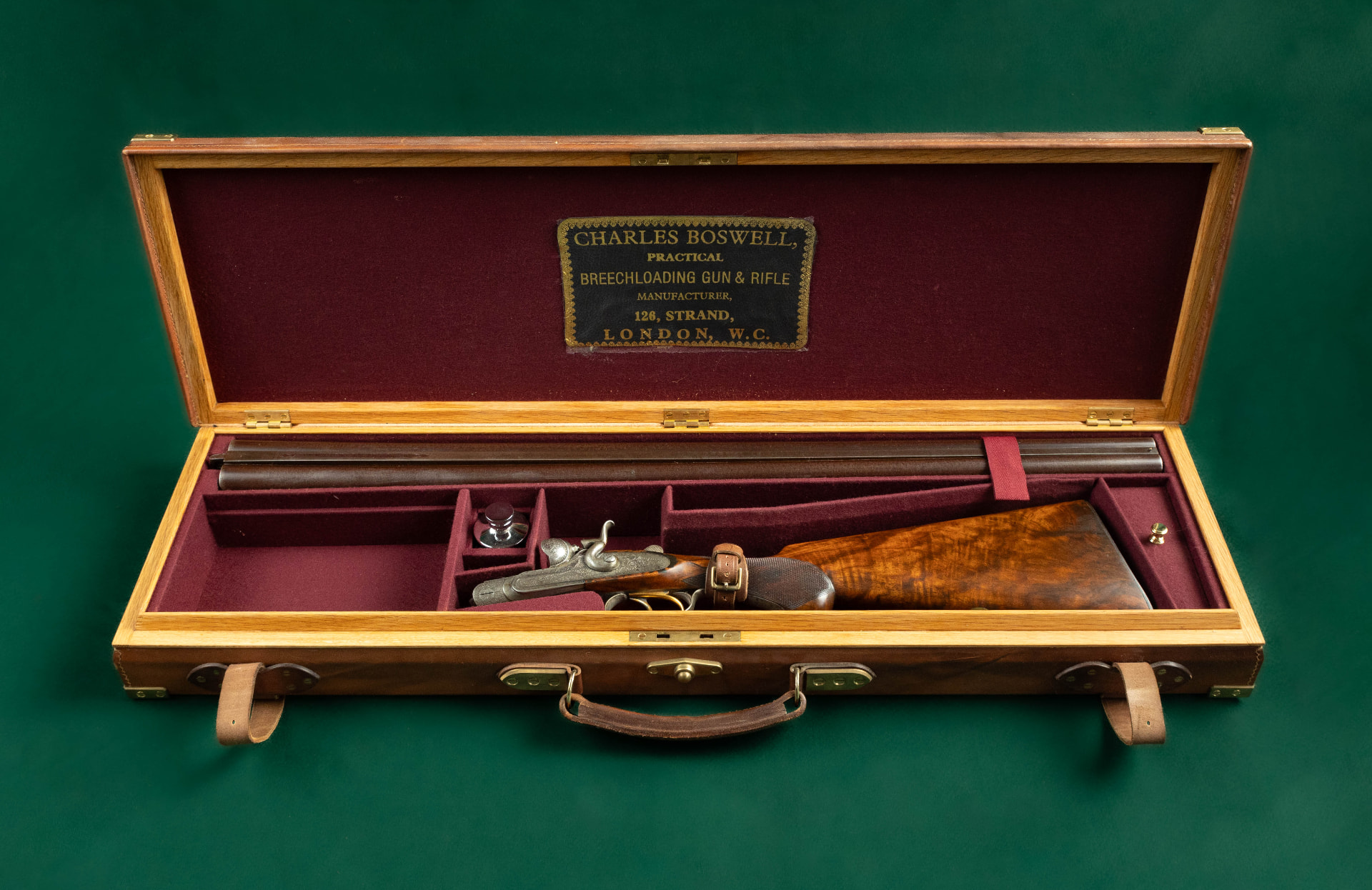
Leather is cut, skived, bound and stitched by hand throughout - no machine seam anywhere on the case. Handles are built up in layers of leather and hand-stitched so they sit in the palm and outlive the owner.
He stains the hides himself to get the depth of colour he wants, in dark brown, tan or a shade discussed with the client.
The lining
Imported billiard baize, cut to the gun
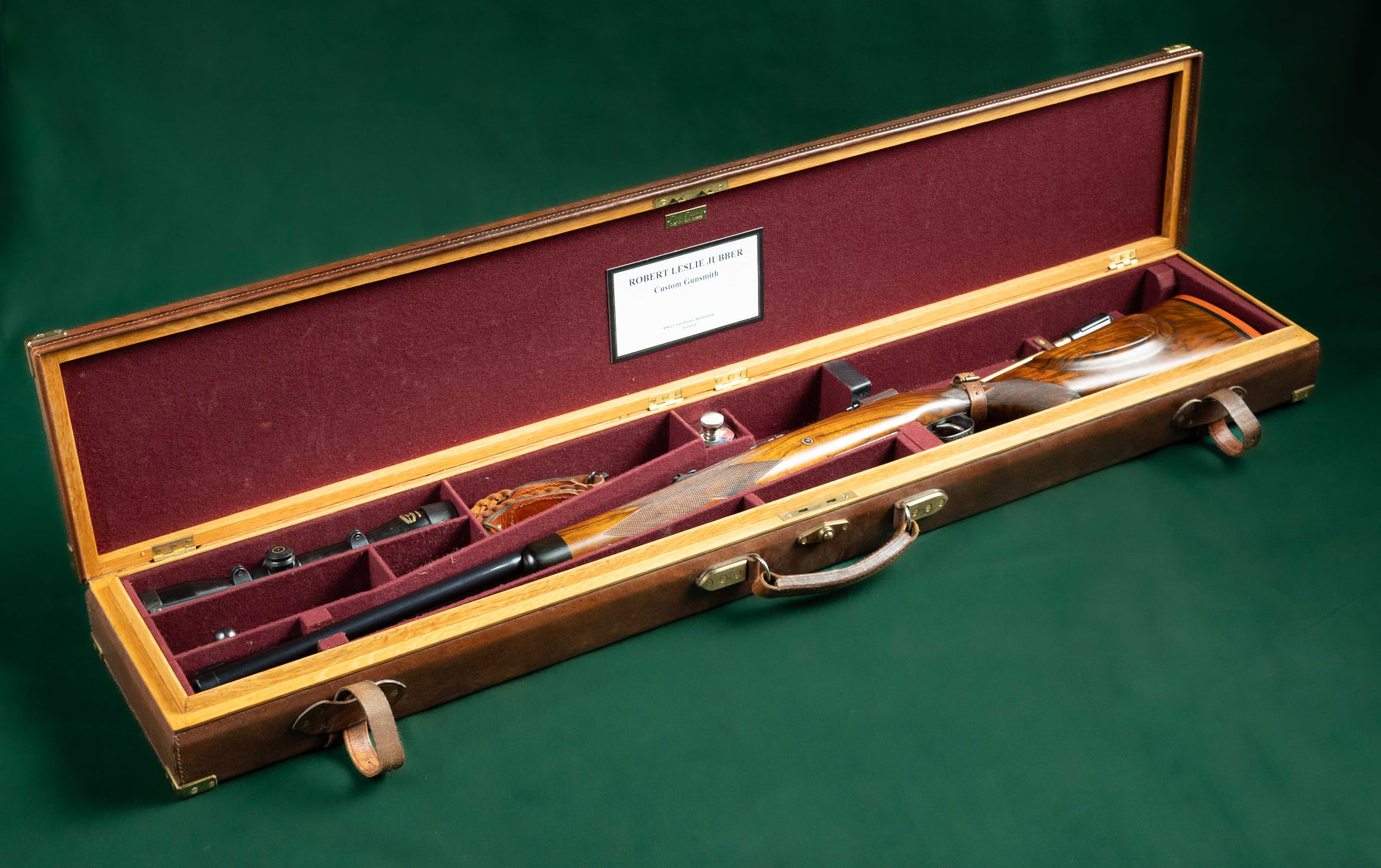
Interiors are lined in imported Hainsworth billiard baize - burgundy, green, blue or red - and every compartment is cut to the piece it holds, so that nothing shifts, rubs or rattles in transit.
Beds are cut for the barrels, action, fore-end, telescope, bolt, snap caps, oil bottle and cleaning kit as the case requires.
The brass
Brass specially made for Tinus
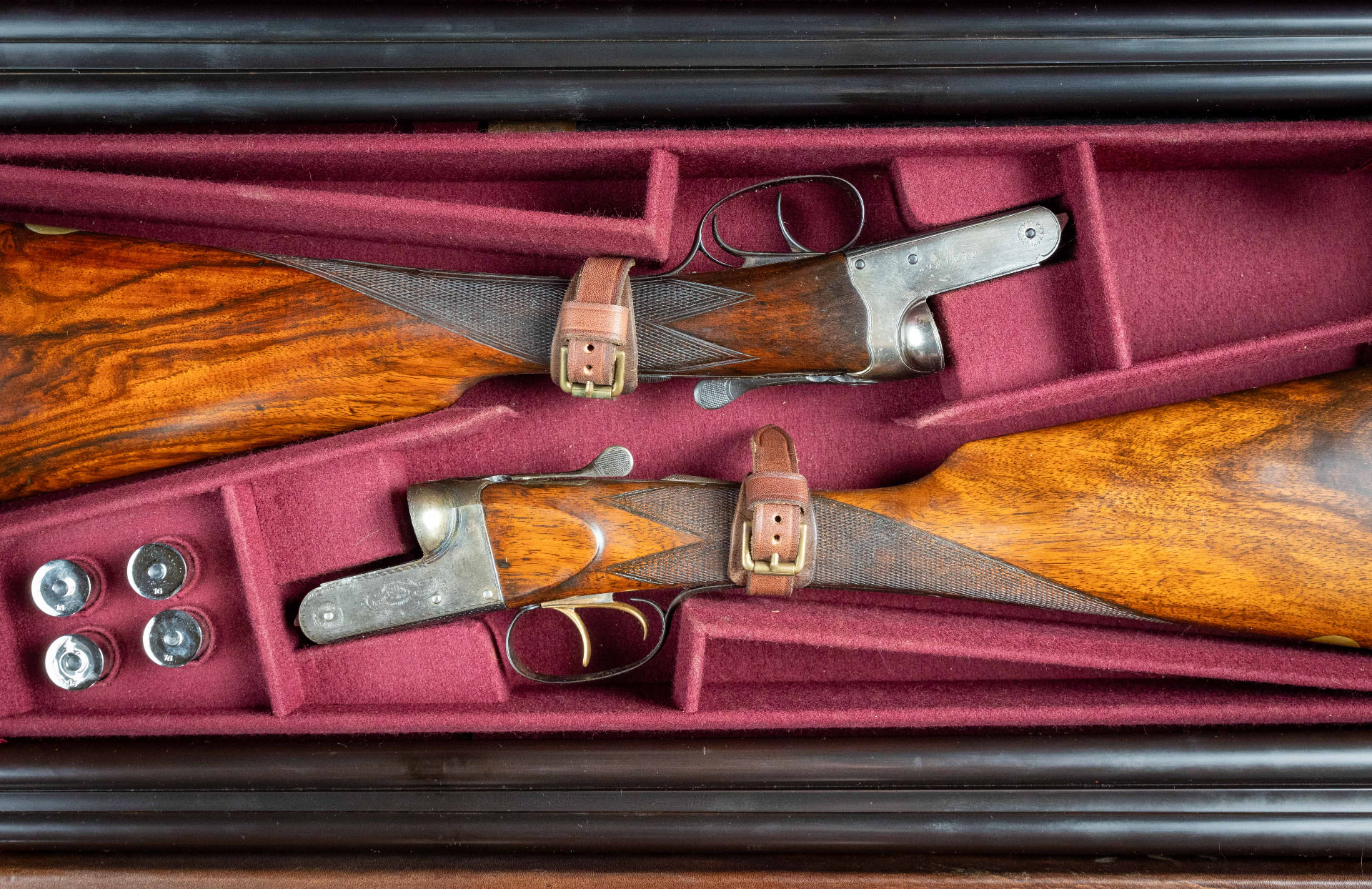
Brass corner plates, locks, escutcheons and fittings are specially made for Tinus according to his specifications, and he designed his own tooling to achieve the finishing he wanted - the tools for it did not exist.
Alongside the cases he makes cartridge magazines, snap caps, oil bottles, maker's labels set into the lid, and cases for handguns and ammunition.
The measuring
His own method, shared with clients abroad
Tinus would rather measure your gun himself. When the gun cannot come to him, he supplies a measuring procedure of his own devising, with drawings for bolt-action rifles, side-by-sides and over-and-unders, so that you or your gunsmith can return figures he can build to with confidence.
That procedure and his written agreement are sent privately to a client once an enquiry is under way. They are not published here.
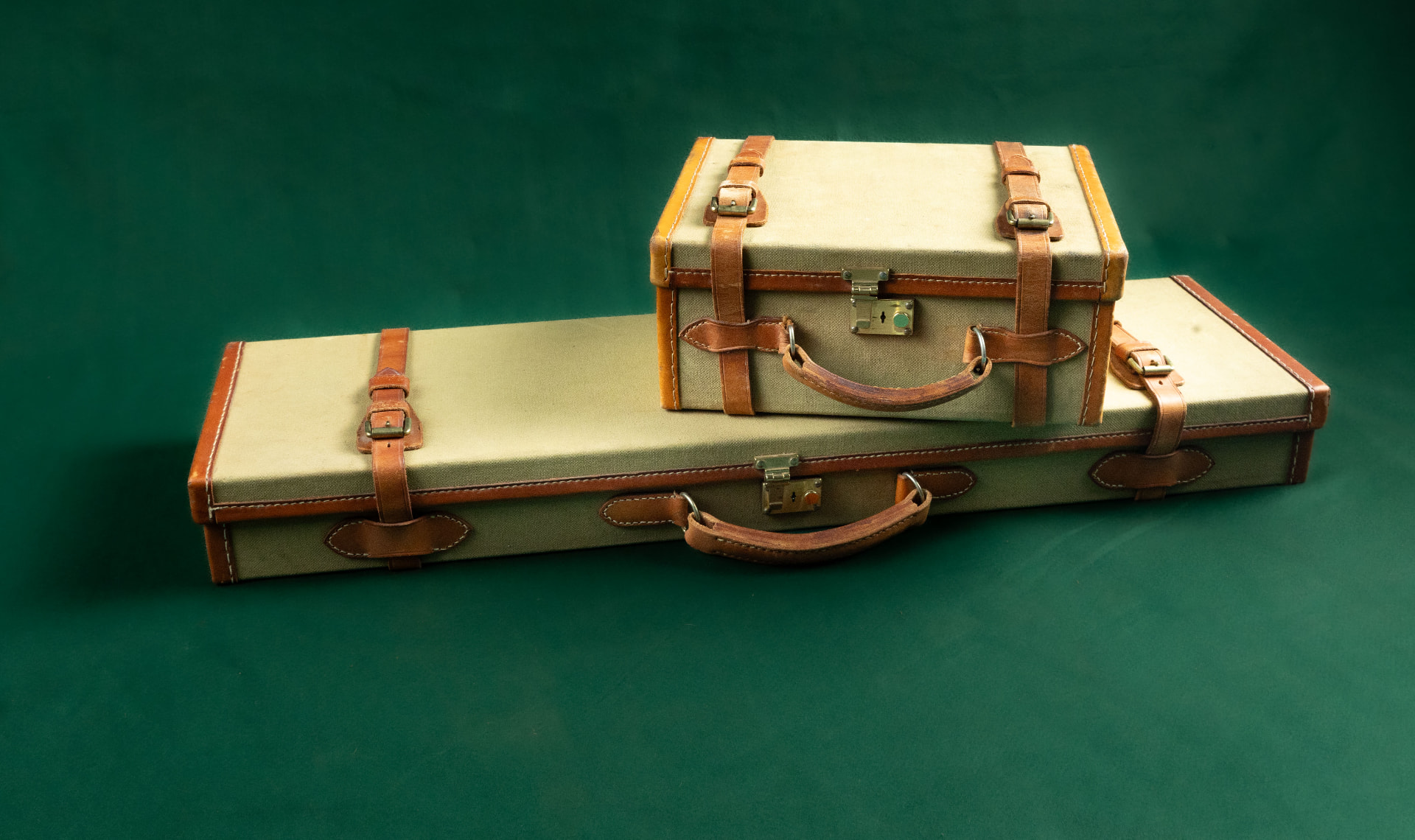
Four to five months. One case.
Genuine handcraft takes time.
There are measurements to perfect. Components to make. Wood to work. Brass to fit and finish. Interiors to shape. Materials to prepare. Details to refine.
It leaves his hands when it is right. Not when a production schedule says it is finished.
One maker. One pair of hands. One standard.
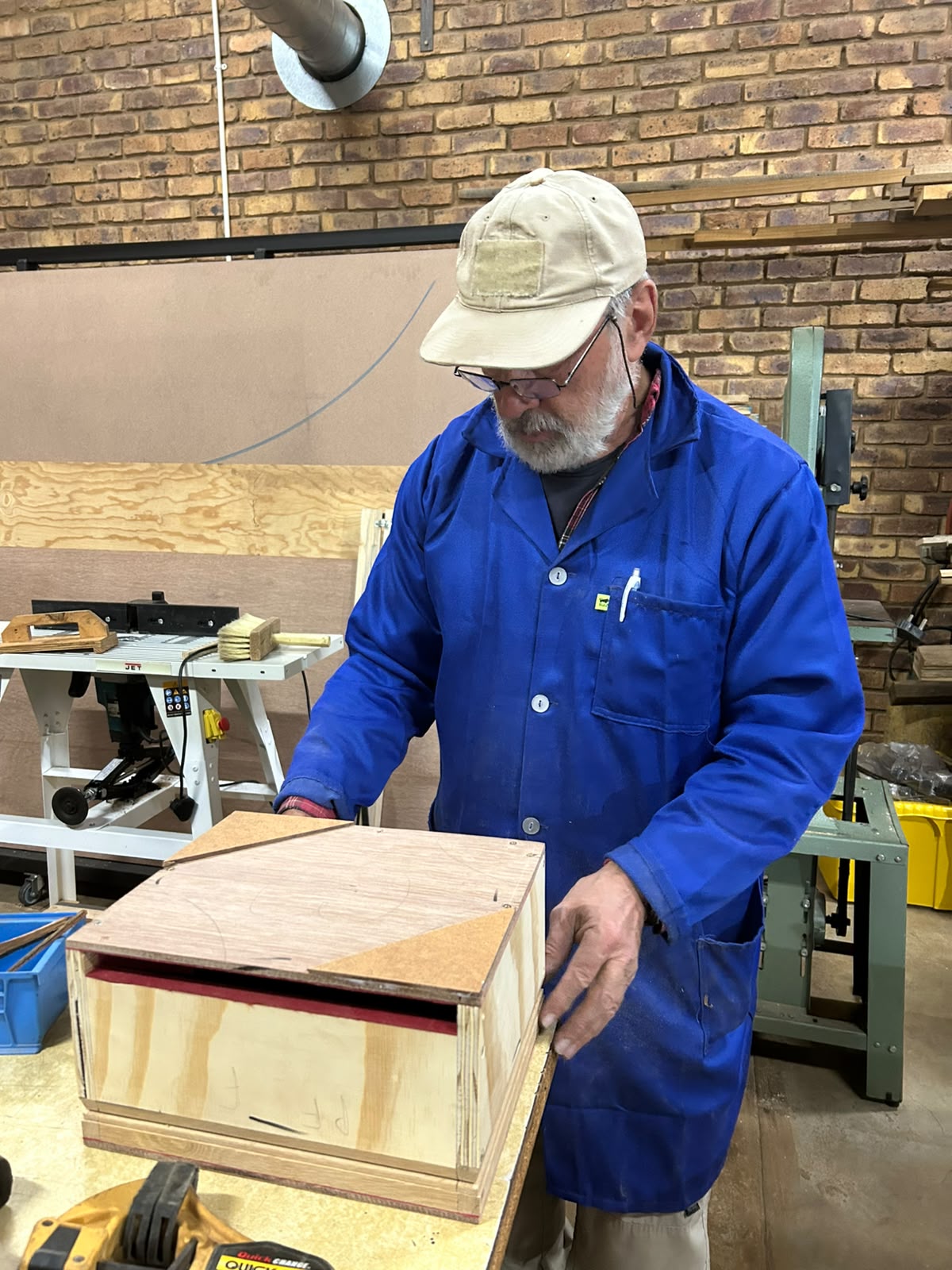
The artisan at work
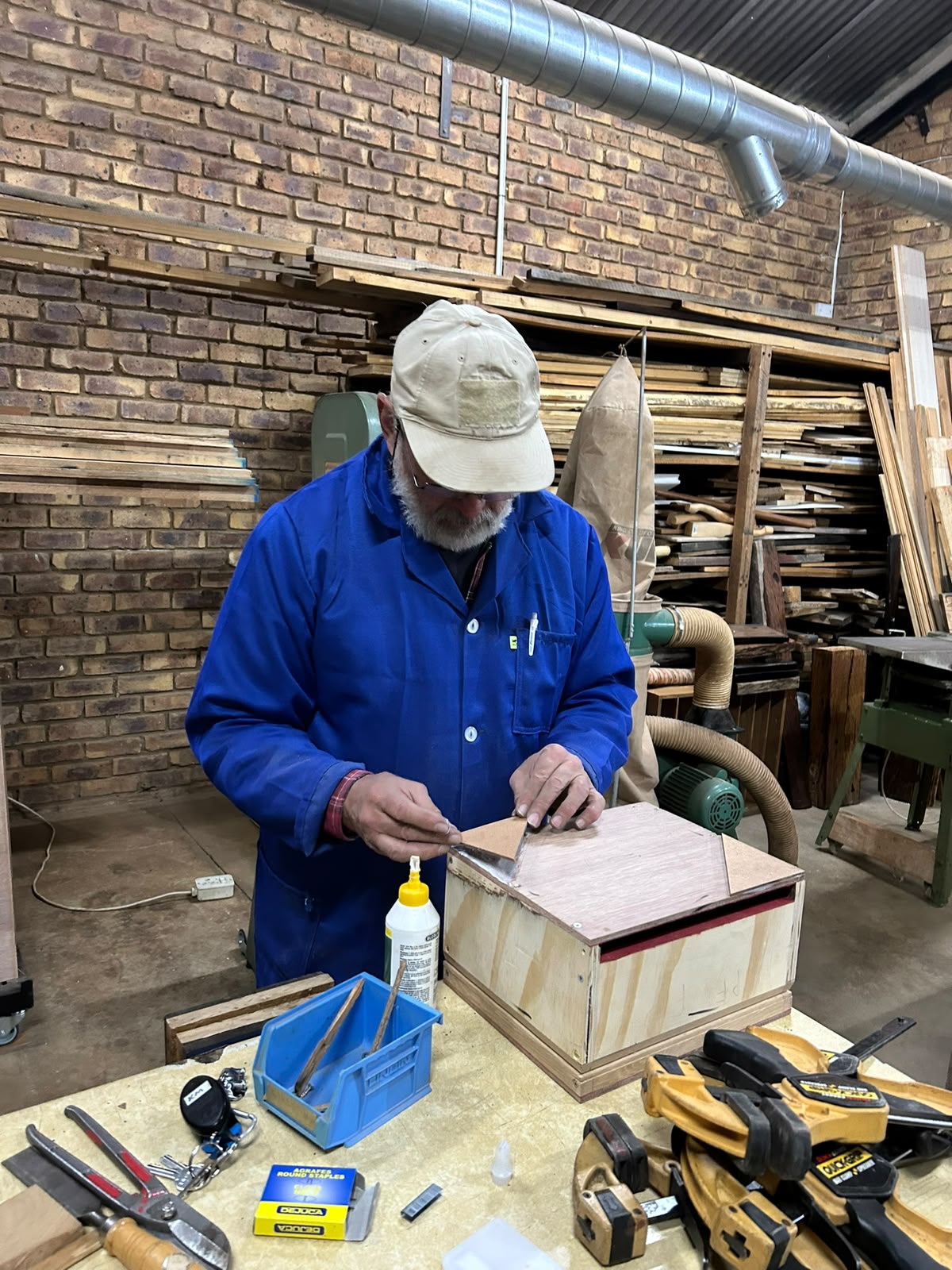
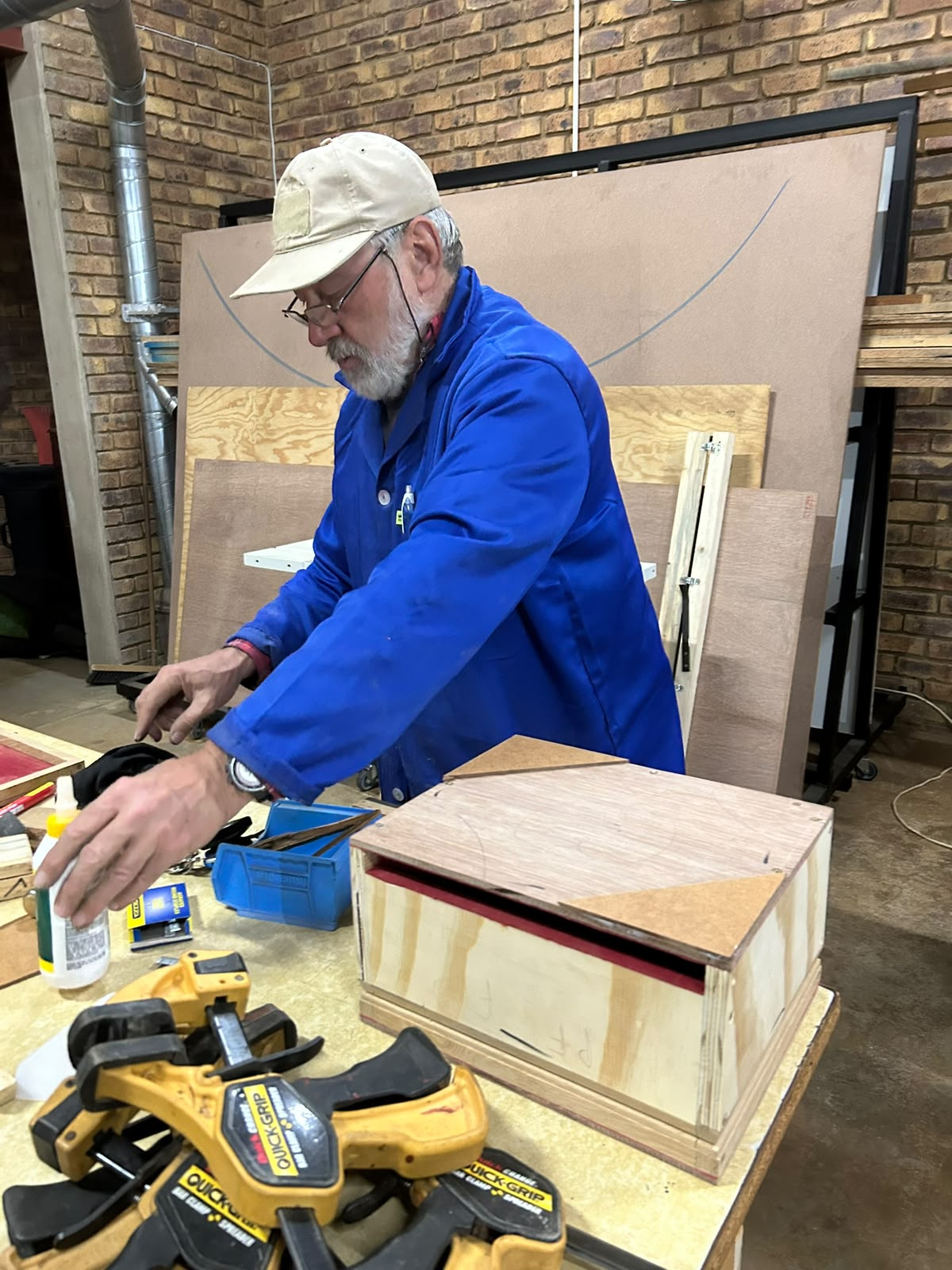
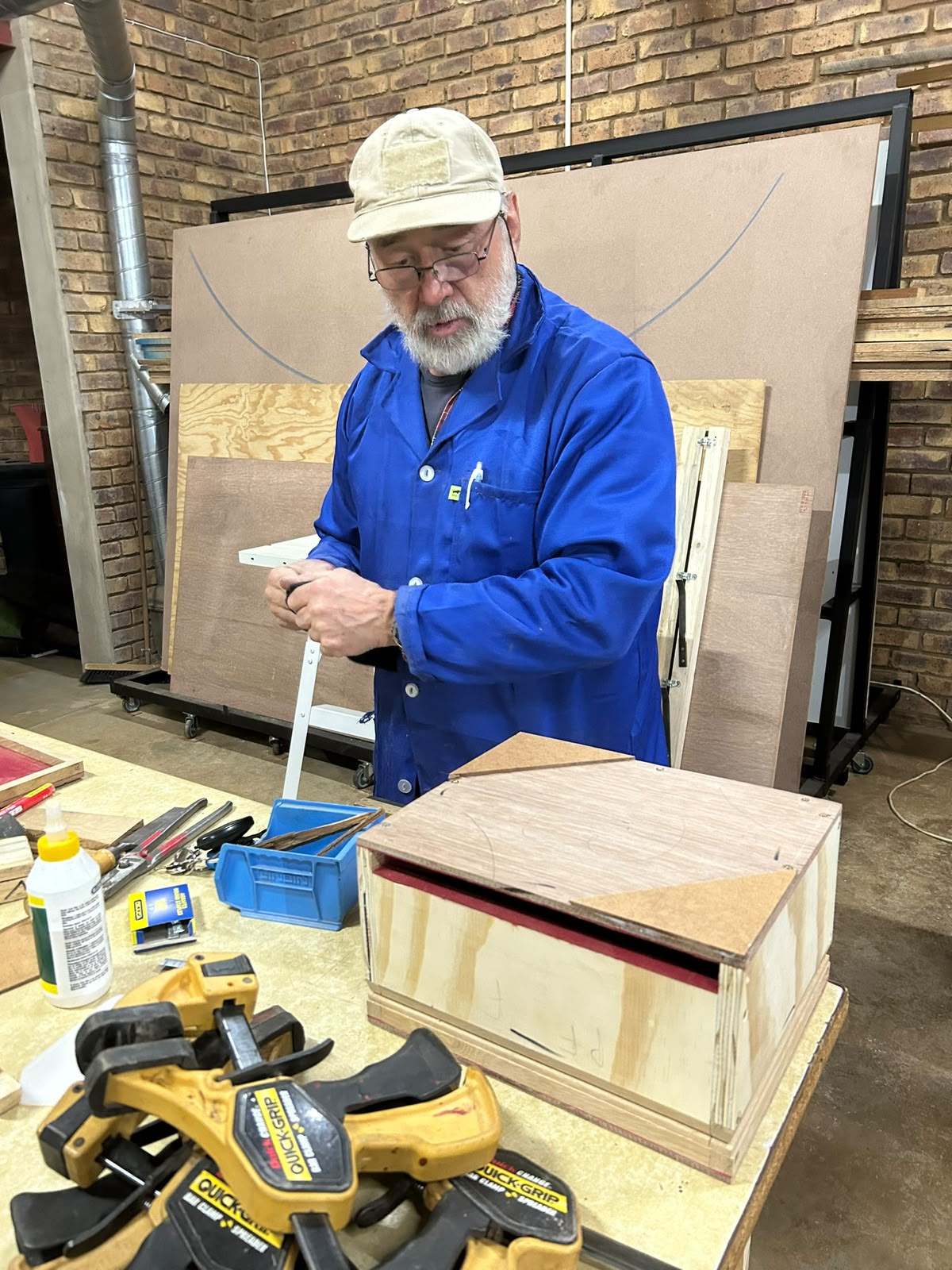
The person whose name appears on the case is the person responsible for making it. Each creation carries the small differences of genuine handwork - evidence that one craftsman built something specifically for one firearm.
The result is more than somewhere to store a gun. It is a purpose-built home - designed to protect it, complement it, travel with it and become part of its story for generations.
Historic projects
Selected commissions of note
Tinus has been part of two historic South African rifle projects that sit firmly in the world of serious collectors. These commissions belong here because they show the level of firearm, patron and occasion his work has been trusted to accompany.
For the Land Rover Vektor “Supremacy” .375 H&H, one of six rifles commissioned by Land Rover South Africa for its 50th anniversary in 1998, the rifle was presented in a best-quality oak and leather trunk case by Tinus Tredoux.
The Prima Seleksies Plezier Mauser project marked the Anglo-Boer War centenary with a numbered commemorative series of 140 rifles in 7x57 mm calibre. It remains another historic project Tinus is proud to have been part of.
From a late 1800s H&H 8 bore underlever to a modern custom-built Hartmann and Weiss Hagen action 7x57, he has seen and cased a few good pieces in his time.
Commission a Tinus Tredoux creation
Cases are quoted per gun, indicatively from USD 3,995, with a deposit to begin and four to five months in the making.